This green, guided tour of Wrexham followed the Trust’s literary excursion in November with David Ebsworth into 1884 Wrexham and Chester.

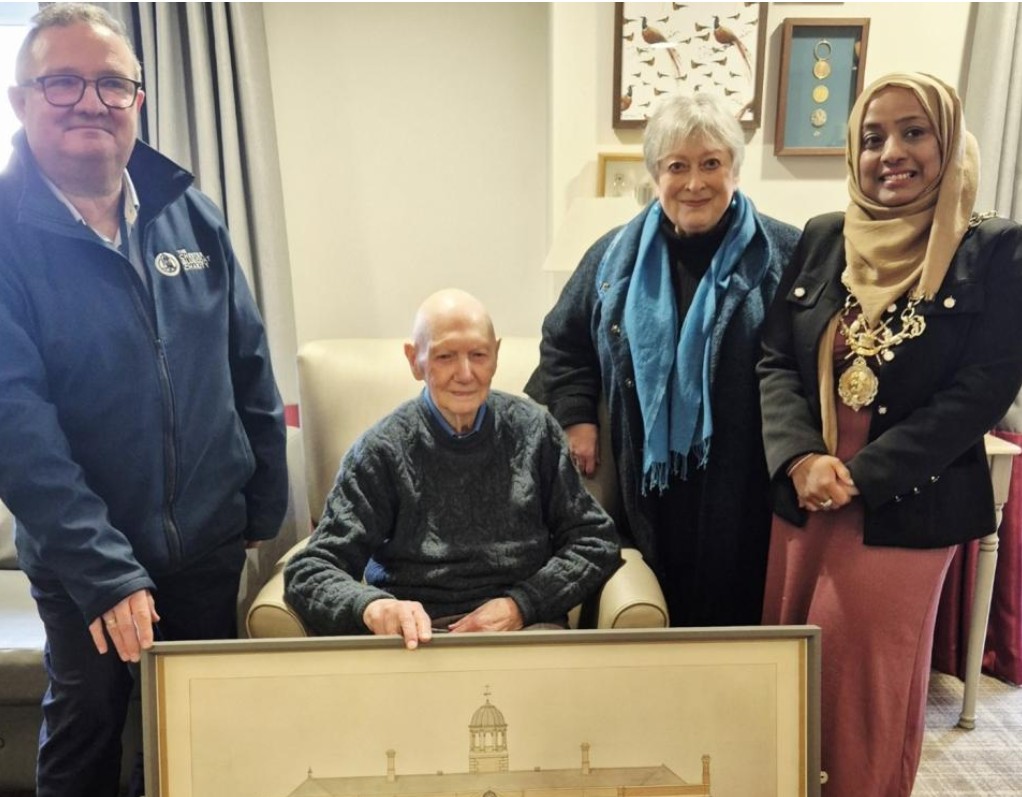
Green Badge Guide, Peter Evans (pictured below), revealed the history and highlights of the city including the tomb of Bishop Lloyd’s infamous great-grandson, Elihu Yale who founded the American College, in St Giles Churchyard (see below).

The walk started at the Vasco Da Gama Café in Lord Street for morning coffee and was green because we caught Bus 1 to Wrexham and walked the 1.5 miles, getting fitter too!

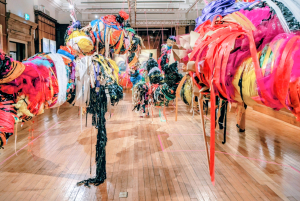
Thank you Karen McKay for this report and the photos of Wrexham street art and Peter below at the tomb.


The Chester Civic Trust has presented its 2025 ‘Good Bad and Ugly’ Special Award to Okells Hoole for their work restoring and bringing to life the former Co-op building in Walker Street.

The awards which this year celebrate the Chester Civic Trust’s 65th year, recognise the best changes to the Chester property and civic scene and encourage higher standards of design and maintenance in Chester’s public realm.

The Co-op in Walker Street opened in 1906 and included a grocer and butcher together with a shoe and clothing store on the upper floor. Latterly it became a convenience store and also accommodated Co-op Funeralcare. The store closed in July 2017 ending 110 years of the Co-op on this site. The empty building started to become dilapidated and run down.

The judges said; “It is great to see that Okells has refurbished the building to provide a new shop selling plants, homeware and gifts together with a café. This is a really good addition to the vibrant Hoole local shopping quarter.”

George Okell, Okells Director added;

“We’re really pleased to have received the Civic Trust award and we’re grateful to everyone who put their hard work into this renovation. With the building always having been there to serve the community around it, we wanted to do just that, bringing it back into use by offering our mix of home, garden and gift products along with fresh food and drink in a neighbourhood cafe. Having worked on the space over nearly two years, it’s amazing to see it being used and we look forward to seeing it evolve.”

Photo above: Christine Russell Chair of Chester Civic Trust presents the Judges Award for 2025 to Okells Hoole. LtoR: Fern Thomas, Operations, Mabli, Front of House, Christine Russell, Chair of Chester Civic Trust, Jordan, Retail Assistant and George Okell, General Manager at Okells Hoole.

Barry Clarke gave a fascinating afternoon talk on The Arts and Crafts Movement in Manchester yesterday.

Barry has recently been involved in the publication of a lavishly illustrated book on this subject (see above).

The Northern Art Workers’ Guild in Manchester was organised in 1896, twelve years after its London predecessor. It involved many people with connections to visits which we have made. Edward Wood, whose work we saw in Middleton, was a luminary. Barry Parker was originally from Manchester, and we saw his work in Letchworth Garden City. The Clarion Guild of Handicraft organised a show in Chester in 1903 at which the Peasant Arts Movement exhibited. We saw their work in Haslemere, Surrey.

Even if you did not attend any of these visits Barry’s talk introduced you to these practitioners and many others.

Refreshments were served after the talk within Bishop Lloyds Palace.

On April 16th Peter Cocker gave a superb and informative talk on Thomas Brassey: The World’s Greatest Railway Builder, celebrated at Chester Railway Station.

Born in Buerton near Chester in 1805, Thomas constructed Chester Station and worked alongside noted engineers of his time such as George and Robert Stephenson, Joseph Locke and Isambard Kingdom Brunel. He built a third of Britain’s railways, three quarters of France’s railways and one in 20 of all the railways in the world.

A bronze statue of him is set to take pride of place outside Chester Railway Station in the Summer following a successful fundraising campaign by the Thomas Brassey Society.

Most of the slides from the lecture are here.

Chester Civic Trust Winners of 2025 ‘Good, Bad and Ugly’ Awards

The Chester Civic Trust which celebrates its 65th year this year, has given its verdict on the best examples of new development, renovation of existing buildings and community projects in its annual Good, Bad and Ugly awards for the City.

Now in its 19th year, the awards made at a ceremony at the headquarters of Chester Civic Trust at Bishop Lloyd’s Palace Watergate Street, Chester on 26th March, highlight Chester’s buildings, places, spaces and projects in an alternative ‘New Financial Year Honours list’.

These awards are presented annually and with the help of members the Trust aims to:

  • recognise progress and change over the past twelve months,
  • encourage high standards in the built environment (urban and rural),
  • recognise achievements that may not feature in a more formal award scheme, and
  • recognise the work of local individuals, firms alike.

Peter Hadfield, chairman of the judging panel, said: “These annual awards are based on nominations from our members. They aim to recognise the best changes to the Chester property scene in the past year. We hope they will encourage higher standards of design and maintenance in our public realm. As always, I would like to thank my fellow Judges for their time and commitment visiting and providing insightful comments on the nominations.”

He added; “Members of the Chester Civic Trust (CCT) excelled this year with a total of 63 nominations. There were 26 Good nominations together with 37 Bad/Ugly nominations. All categories included an interesting mix of nominations. Once again it was good to see some from outside the city and we would like to receive more in the future.”

Chair’s Special Award

Okells Hoole, Walker Street, Hoole

The Co-op in Walker Street opened in 1906 and included a grocer and butcher together with a shoe and clothing store on the upper floor. Latterly it became a convenience store and also accommodated Co-op Funeralcare. The store closed in July 2017 ending 110 years of the Co-op on this site. The empty building started to become dilapidated and run down.

The judges said; “It is therefore great to see that Okells has refurbished the building to provide a new shop selling plants, homeware and gifts together with a café. This is a really good addition to the vibrant Hoole local shopping quarter.”

The Good Awards

15 – 23 Frodsham Street

This was another empty building (previously Yates Wine Lodge) desperately in need of refurbishment and a new use. The upper floors have now been converted to residential apartments with the whole of the ground floor being occupied by the kitchen retailer Magnet.

The judges said; “The work has been carried out to a high standard and the shop unit provides an active frontage to the street. This is a welcome improvement to Frodsham Street.”

The Pied Bull, Northgate Street

This is Chester’s oldest coaching inn; it dates back to 1155 and since 2009 has been trading as an independent business. It is a  pub, restaurant and thirty one bedroom hotel, it also has a microbrewery and a secret beer garden. Two adjacent buildings including the grade II listed Folliot House have been converted to provide twenty of the bedrooms.

The judges said; “During 2024 the owners completed a huge refurbishment covering both the exterior and interior of the pub and restaurant. It is good to see this sympathetic refurbishment which also includes work to reduce the environmental impact of the business.”

Hough Green Local History Group

The judges said; “A sub-group of the Hough Green Residents Association comprising just three people have produced three books ‘From Bricks to Villas’, ‘The Green by the Hollow Way’ and ‘Mansions, Semis and Terraces’. To coincide with the recent publication of the third volume it is timely to recognise their hard work.

These well researched books provide an excellent history of the areas of Hough Green, Curzon Park and Saltney.” Copies are ordered by email from this address local.history@raycar.plus.com.

The Festival of Ideas

This was a programme of free, inclusive and accessible public events on a wide range of themes in and around Chester, co-created by the University of Chester, external stakeholders and city partners. The judges said; “The events covered a range of topics including environmental issues, heritage, the future of cities and wellbeing. It is good to see the University engaging with local people and encouraging civic participation. We are delighted to see that the Festival is to be repeated this year.”

Commendations

New Housing, Commonhall Street 

The judges said; “This new residential development fits in well with the street scene. It is good to see the carefully detailed brickwork around doors and windows and the use of other traditional materials matching the houses on the opposite side of the street.”

Refurbishments in St Werburgh Street and Eastgate Street

The judges said; “We are pleased to recognise several façade refurbishment projects which have been carried out to a high standard. These are the HSBC building (47 Eastgate Street) and the building occupied by Next (37 Eastgate Street) together with the Eastern Section of St Werburgh Street. At the street level Brook Taverner have fitted out numbers 14 and 16 with a simple dark blue and white shopfront with nicely dressed window display. If only other parts of Chester could look this good.”

Repairs to Northgate

These Awards also aim to recognise small projects which have been carried out to a high standard. The judges said; “The stonework repairs to the Northgate have been extremely well done and we hope this sets the standard for work to the walls in the future.”

Hoole Hardware, Faulkner Street

The judges said; “This shop always presents a well-designed and beautifully presented  display within its fine shopfront, which adds a modern flavour to its traditional form. The shop elevates the retail offer on this busy street.”

The Bad and The Ugly Awards

The judges said; “This section is included in the hope that it will prompt action. Given the current stagnant economy and inadequate funding for local services, we are not anticipating that 2025 will bring many improvements.

As usual we had many nominations for our ‘Hardy Perennials’ (those buildings which get mentioned year after year) including Dee House, the former Quicks Garage/St Olaves, Diocesan House, the collapsed wall in Liverpool Road, Delamere Street, the Southeast Angle Tower and the dilapidated buildings in Boughton. We remain concerned about all these areas but this year we decided to concentrate on new nominations and those which we have not mentioned for some time.”

The City Walls

The judges said; “We have included the City Walls because there is both bad and good news. The bad news is that there is no progress with repairs to the Recorders Steps or the steps on either side of St Martins Gate. The Walls should be a key priority for maintenance and presentation especially given their value as a tourist, leisure and educational asset.”

“The good news is that preliminary works associated with the reconstruction of the collapsed section of wall behind the Wesleyan Chapel I St John Street are underway. Sadly, there is no agreed dates for work beyond the anticipated completion of site investigation works and scheduled monument consent in mid-2026.”

“It is also good to see that the upper part of Off The Wall (a regular in the Bad/Ugly section of these awards) has been repaired.”

Kirton House and Former GP Surgery, Hunter Street

The judges said; “Both Kirton House and the Former GP Surgery in Hunter Street are in a shockingly bad state. The Victorian red brick Kirton House is amazingly high quality whilst the 1950s doctors’ surgery is a good example of mid-century Modernism and post-war optimism in the early years of the NHS.”

“The dilapidation of these buildings detracts from the new development of the Northgate Quarter and should be a priority for improvement.”

“Too many empty buildings in Chester are left to deteriorate and become vandalised resulting in demolition and redevelopment when an earlier intervention could bring them back into beneficial use.”

Apartment Building in Pierpoint Court 

The judges said; “The apartment building in Pierpoint Court is probably the best example of a detached city-centre warehouse in Chester and is of special interest for the remains of the Common Hall. It is good to see that this Grade II Listed Building has been developed to provide residential accommodation.”

Unfortunately, the repointing of parts of the building has been badly done and the setting is marred by the wood/blockwork stores, gravelled area and the adjacent ‘builders’ yard’.

 Commonhall Street

The judges said; “There is a proliferation of wheelie bins and other items (including beer barrels and pallets) around Chester. We have chosen Commonhall Street as an example, but they are everywhere! These are detrimental to the street scene and block roads and pavements. Properly designed storage areas where these are shielded and contained would help to reduce the problem.”

Public Toilets

The judges said; “It is shocking that there are virtually no public toilets in the city centre. The toilets in the market are badly signposted and already showing signs of wear whilst the badly maintained toilets in Frodsham Street are unappealing. The toilets in the Grosvenor Precinct and below the old market are no longer available. These are an important amenity for visitors and residents alike and appropriate provision should be made.”

The Judges were Peter Hadfield (Chair), Chloe Sheward, Paul Fielding, Steve Wright, and Philip Harrison.

Buildings photos are available here for viewing and download at high resolution

Awards ceremony photos are available here for viewing and download at high resolution

Chester Civic Trust members have been enjoying the lovely Spring Weather. Last week there was a residential visit to the Surrey Hills. This included a tour of the Shah Jahan Mosque in Woking. Built in 1889, it was the first purpose-built mosque in the UK and Northern Europe.

This week, we also had a day trip to our nearest World Heritage site, the Pontcysyllte Aqueduct & Canal. On the way was a fascinating visit to Plas Newydd.

FEBRUARY 17th (tbc)
The REOPENED Harris Museum, Preston, Lytham Hall with snowdrops and meal.

JANUARY 10th  – Bishop Lloyd’s Palace, 7pm,
New Year’s Quiz

NOVEMBER 28th, – Bishop Lloyd’s Palace, 7.30pm.
A talk from David Ebbsworth on ‘French Fun: We’ll Always Have Paris’.

NOVEMBER 12th at the Grosvenor Museum Lecture Theatre at 7.30pm.
Lecture Series: Rose McArthur, Director of Highways, Transport and Climate Change for Cheshire West and Chester Council on the Achievements, Forthcoming Plans and Challenges facing the Council.

OCTOBER 30th 
Bradford City of Culture

OCTOBER 13 – 19 
North Lincolnshire study visit for members. The 5 day visit includes Gainsborough, capital of the Vikings, Lincoln’s castle, home to an original 1215 Magna Carta, the Wolds, an area of outstanding National Beauty, Louth, Tealby, the Bomber Command Centre, Tattershall Castle, and the Millennium Gallery in Sheffield on the way back to Chester.

OCTOBER 8th at the Grosvenor Museum Lecture Theatre at 7.30pm
Lecture Series: Paul Fielding of Lovelock Mitchell on ‘Chester’s other architect – T M Lockwood and Sons and their ongoing architectural legacy’.

OCTOBER 7th – Bishop Lloyd’s Palace, 7.30pm.
Professor Martin Heale on the Abbot’s Residence in Chester Cathedral.

OCTOBER 2nd – AGM – Cathedral Refectory, 7.30pm
Our key speaker will be Lady Alexis Redmond MBE, the Lord Lieutenant of Cheshire and President of Chester Civic Trust.

SEPTEMBER 25th –  A walk in Eastham Pleasure Gardens.
Following on from the previous week’s talk from David Mottram we visit to see Eastham Pleasure Gardens in person. Limited places.

SEPTEMBER 18th –  Bishop Lloyd’s Palace, 2pm.
David Mottram gives a talk on the history and brilliance of Eastham Pleasure Gardens.

SEPTEMBER 13th, Bishop Lloyd’s Palace, 10am – 4pm.
‘Tea at the Palace’ part of the UK’s Heritage Open Day celebrations September 13-21, come along and bring friends and relatives.

AUGUST 22nd at Bishop Lloyd’s Palace at 2.00pm.
Treasures in the Attic. A talk by Karen McKay.

JUNE 26th, Tuesday 7pm.
Celebration Sapphire Jubilee (65th year) Dinner – more details tba.

JUNE 12th
Day visit to The World of Glass, St Helens and Astley Hall, Chorley.

JUNE 10th at Bishop Lloyd’s Palace at 7.30pm.
Keep up to date with local archaeology

MAY 21st
Special guided tour of Wrexham.

MAY 16th 2pm. at Bishop Lloyd’s Palace at 2.00pm.
The Arts and Crafts Movement in Manchester.

APRIL 16th. at the Grosvenor Museum Lecture Theatre at 7.30pm
Lecture Series: Peter Cocker will give a talk on Thomas Brassey: The World’s Greatest Railway Builder, celebrated at Chester Railway Station.

APRIL 10th** 
Day visit to Llangollen including a tour of Plas Newydd. lunch and talk on the Pontcysllte World Heritage Site.

MARCH 31 – APRIL 4*
Residential visit to the Surrey Hills including the Watts Gallery and Artists Village (details in the December Newsletter). Following from the lecture in November, a visit to the Watts Gallery and Village will be one of the highlights of the 5 day visit for members of the Trust. Other places of interest during the visit will include Hughenden Manor, the home of Benjamin Disraeli, the Stanley Spencer Gallery in Cookham and a private viewing of the National Trust’s Polesden Lacey.

MARCH 19th at the Grosvenor Museum Lecture Theatre at 7.30pm
Lecture Series: Colin Potts, Programme Leader International Tourism Management, University of Chester.

FEBRUARY 28th** at Bishop Lloyd’s Palace at 7.30pm.
Chester Witches Peter Elliott and Clare Dudman

FEBRUARY 12th at the Grosvenor Museum Lecture Theatre at 7.30pm
Lecture Series: Create Streets – a Think Tank currently supporting Cheshire West and Chester.

THURSDAY JANUARY 30th** at Bishop Lloyd’s Palace at 2.00pm
MICHAEL TREVOR BARNSTON, a Life Member of Chester Civic Trust, will give a talk about his family’s illustrious history followed by afternoon tea. Booking forms in the December Newsletter

WEDNESDAY JANUARY 15th at the Grosvenor Museum Lecture Theatre at 7.30pm
Lecture Series: DR JAMES WRIGHT will talk about his recent book ‘Historic Building Mythbusting’

JANUARY 5th 7pm.*
‘Twelfth Night Quiz’ – Bishop Lloyds Palace – £10 including festive refreshments – booking forms in December mail out


More dates and details to come!!

Please note Civic Trust members have FREE admission to the lectures at the Grosvenor Museum. Guests are welcome £5 on the door.

(Booking forms for events marked * were included in the September mail out. **were included in the December mail out. )

In 2005 Chester unveiled two ambitious collaborative plans. Its Place Marketing Strategy set out the vision of Chester becoming a must-see European city by 2015 and its Culture Park set out the steps to achieve it through sensitive development that would make the most of the city’s assets. They were lauded nationally as forward-thinking best practice, yet by 2012 they had largely been forgotten, mentioned only in an appendix of the One City Plan they had helped inspire.

Fast forward to 2025, Chester has become the Most Welcoming City in the UK and ranks with Rome and other cities as the most beautiful. The Culture Park’s architect, Andy Farrall, is Chair of the Making Group of One City Plan 2.0, and its Programme Manager, Colin Potts, leads the OCP Visiting Group, chairs Destination Chester and heads the University of Chester’s tourism courses.

The lecture on March 19th, in a packed Grosvenor Museum Lecture Theatre, saw Colin reviewing the Place Marketing and Culture Park plans, and reflect on how much has been achieved over the last 20 years. It also considered the place Chester could become – 20 years on.

A link to the slides shown at the presentation is here.

There were trials and executions of witches in Chester in the seventeenth century and this meeting on Friday 28th February explored some aspects and myths around this.

Local historian, Peter Elliott, discusses this on his Chesterwiki site which inspired one of our members, Clare Dudman, to create a film about the events, ‘The Three Ravens’. It tells the story of three of the witches brought to trial in Chester, and the Judge John Bradshaw. As President of the High Court of Justice, Bradshaw, a Cheshire man, signed the execution order for Charles I. He was also Chief Justice of the Chester and North Wales Circuit and presided over several witch trials.

‘Three Ravens’ is Clare’s fourth event for the Heritage Festival, filmed mainly in Bishop Lloyd’s Palace in 2023. She received a commission, which allowed her to pay for professional actors

Karen presented Peter’s inspirational slides which are based on his knowledge and expertise available in more detail with links to sources here: https://chester.shoutwiki.com/wiki/Witch_Trials

Peter says; “My reason for writing the initial article on the “Chesterwiki” website was the the inaccurate information that was being put about concerning the witch trials.”

“The numbers of executions were greatly inflated and the whole issue was sensationalised prior to Clare. Bradshaw was portrayed as a “power-crazed” judge and there was no surrounding historical context, either as regards the contemporaneous trials in Wales (same judges) or the other things Bradshaw was involved in. He was a figure of national importance. Information being written also confused modern perceptions of “witches” with what people would have believed at the time.”

He added; “The story goes a long way back. Plegmund, Alfred’s archbishop from Plemstall, was probably involved in the drafting of “Cake-burning” Alfred’s Law Code. Plegmund’s Well in itself is a wonderful story of “Preservation and Progress”.

“Alfred’s makes the act of consulting “witches” a crime – which may be a mistranslation. It appears to be the origin of “not suffer a witch to live”. Alfred’s law seems to have been intended against “malefic” acts of a fairly general kind and there is no mention of any “diabolical conspiracy against the state” such as appears in the Chester Mystery Plays.”

“Burning witches was rare in England. They were hung. Protestants tended to execute more witches than Catholics. One wonders how much the large number of witch trials in Germany were entertainment for the masses, like Clare’s play.”

“Looking at the context in Chester there is an interesting mix of myth, legend and tradition. The Devil turns up in the Mystery Plays as a rather comic character played by the Tanners, and the Ale-Wife accompanies him in parades. The Tanners had their mysterious potions and the Ale-Wife’s “spells” can be likened to recipes for brewing beer, making cheese etc. The other character appearing in the Mystery Plays is the “Antichrist”. In modern recreations his identity is usually obvious from the start, but in the original play he seems to pose a more subtle threat. “Magic” is now the “work of the Devil” used with the intent of overthrowing the state and we first see Bradshaw and Cromwell being portrayed as such.”

“The development of the English anti-witchcraft laws reflects this concern with the state. Henry VIII’s laws put finding treasure (which should be his) before causing harm. Elizabeth has a personal astrologer but doesn’t want anyone else predicting her demise. James thinks “they” are after him personally.”

“The Welsh are a lot more relaxed and see it as a local issue that can be sorted-out by confession and apology. Gloom-laden prophecies about their leaders/rulers have been around for ages. The second Pendle trial is investigated by John Bridgeman, Bishop of Chester, who finds it to be a money-making sham. In the 1600’s it all bursts out into print – more mass entertainment.”

“That brings us down to mass-entertainment of today and the context of Clare’s play. She makes it clear her portrayal is fictionalised and makes it obvious where she strays from accuracy (Bradshaw takes the train to Wales). She leaves the audience to consider for themselves the relationship between his witch trials and his trial of King Charles, between the threat to the state of the Devil and his cohorts and that of Cromwell. The “real” history, even presented as fiction is far more interesting than inaccurate history presented as truth.”

“Running through this is the sense of place, where peoples lives unfold and their stories are sometimes told, becoming real once more through their echoes in the built environment they left behind.”

Photos of the event can be seen here:

George Payiatis, a Senior Urban Designer with Create Streets, gave a presentation on the recent research and work carried out by Create Streets.

Create Streets is currently working on a draft design code for Cheshire West and Chester Council. (At this stage George will NOT be able to give any details.)

The foundation has already set 7 design codes including the town centre of Lichfield with 100 new homes and a design code for wider pavements and more street trees in new developments across Surrey. See a list of Create Streets 2024 developments on the Create Streets website

Slides from the event were promised by the speaker, meanwhile a selection of slides from the event are available here.